
Open Enrollment
Designing and launching a new Open Enrollment feature to enable scalable self-service booking and transparent commitment logic for business clients.
Background
Open Enrollment bookings previously required manual coordination via email, limiting scalability and creating uncertainty around course suitability, availability, and financial commitment. The goal was to introduce a structured self-service experience aligned with B2B approval dynamics, reducing manual handling while maintaining trust and transparency.
Research
Since direct user interviews were not conducted, research was grounded in:
Google Analytics data (demographics, geography, interests)
Stakeholder insights (common questions, objections, approval patterns)
User Personas
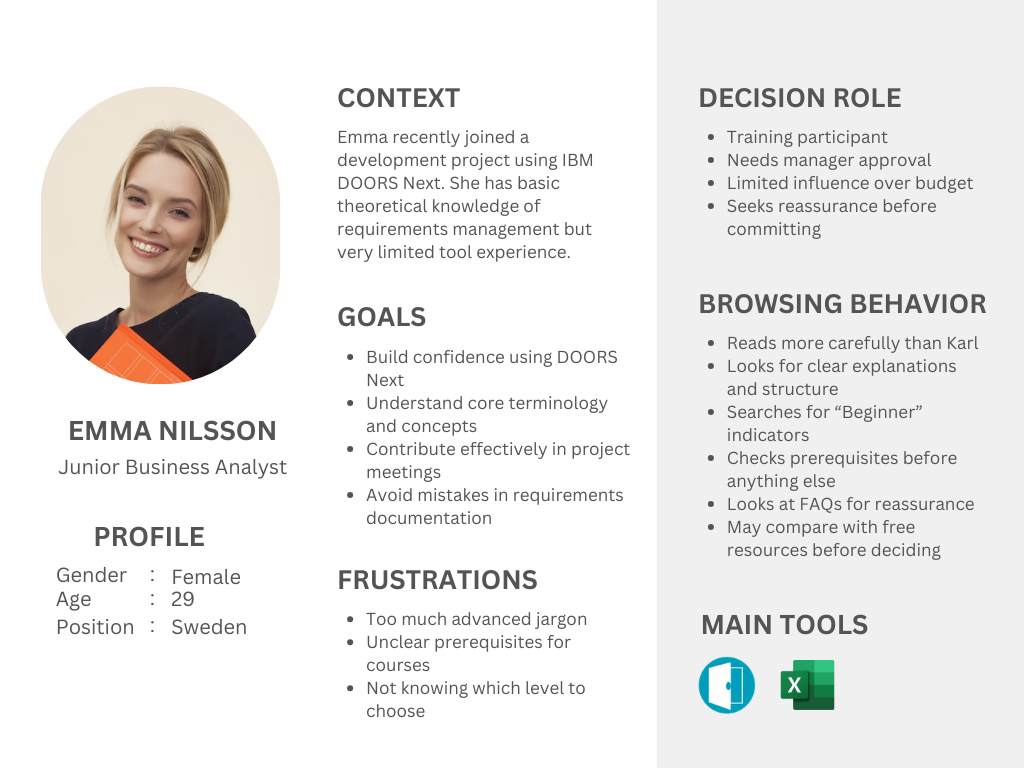
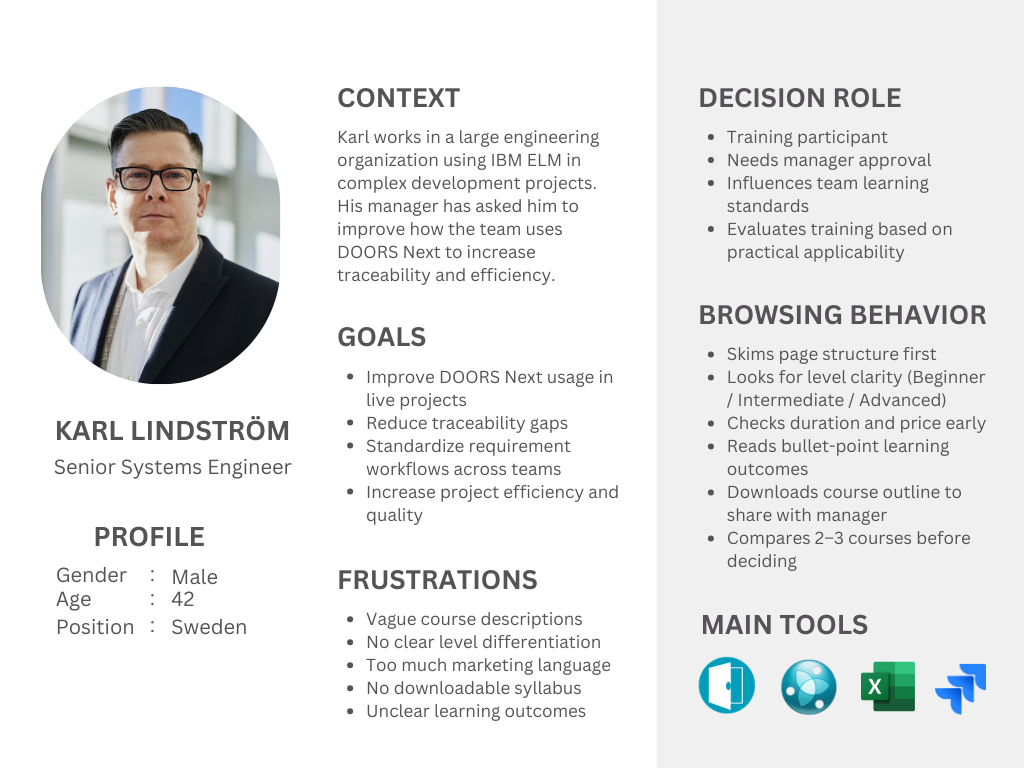
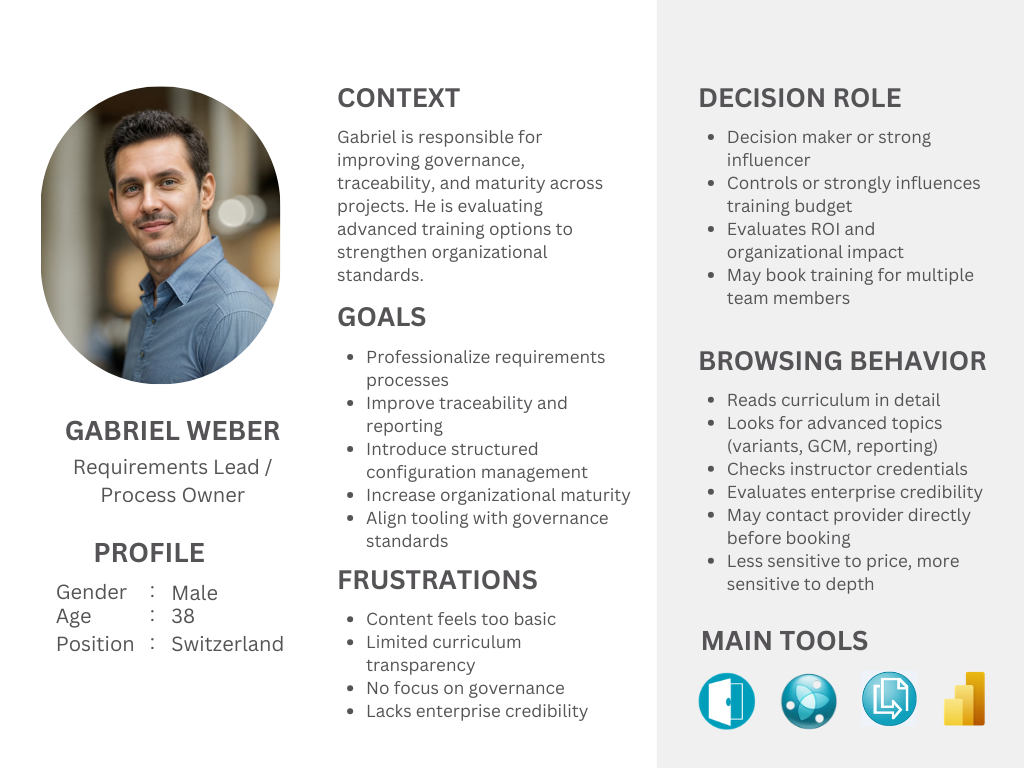
From the research, I defined three primary user types:
Beginner (needs clarity & reassurance)
Professional (evaluates depth & relevance)
Decision-maker (navigates approval & budget)
User Goals
- 1 Identify the right course level
- 2 Quickly assess session relevance
- 3 Clarify logistics (date, format, seats, pricing)
- 4 Feel confident before committing financially
Pain Points
- 1 Unclear course differentiation
- 2 Excessive manual email coordination
- 3 Uncertainty around payment timing
- 4 Complex internal approval processes
User Flows
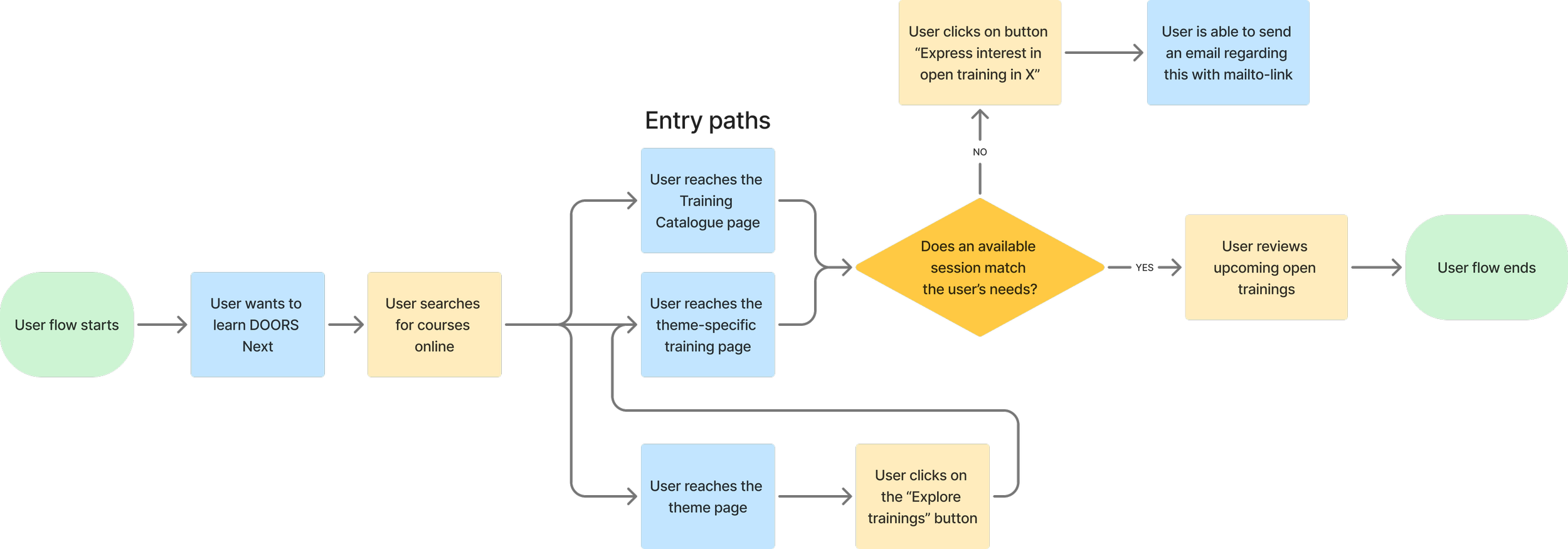
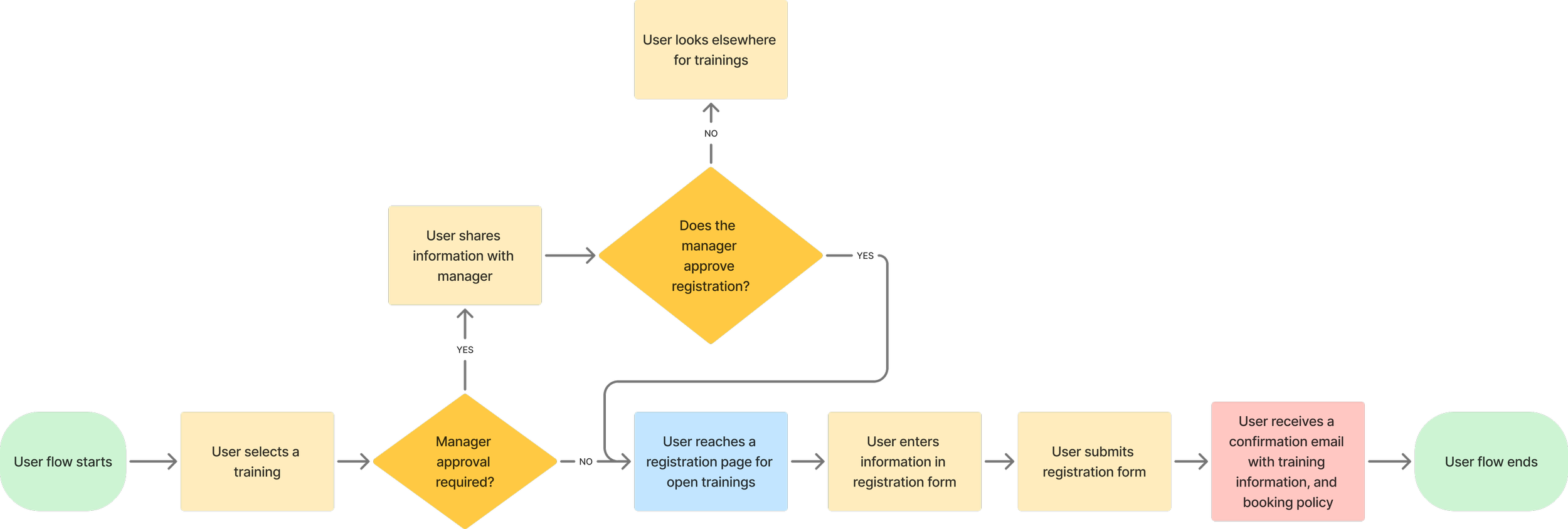
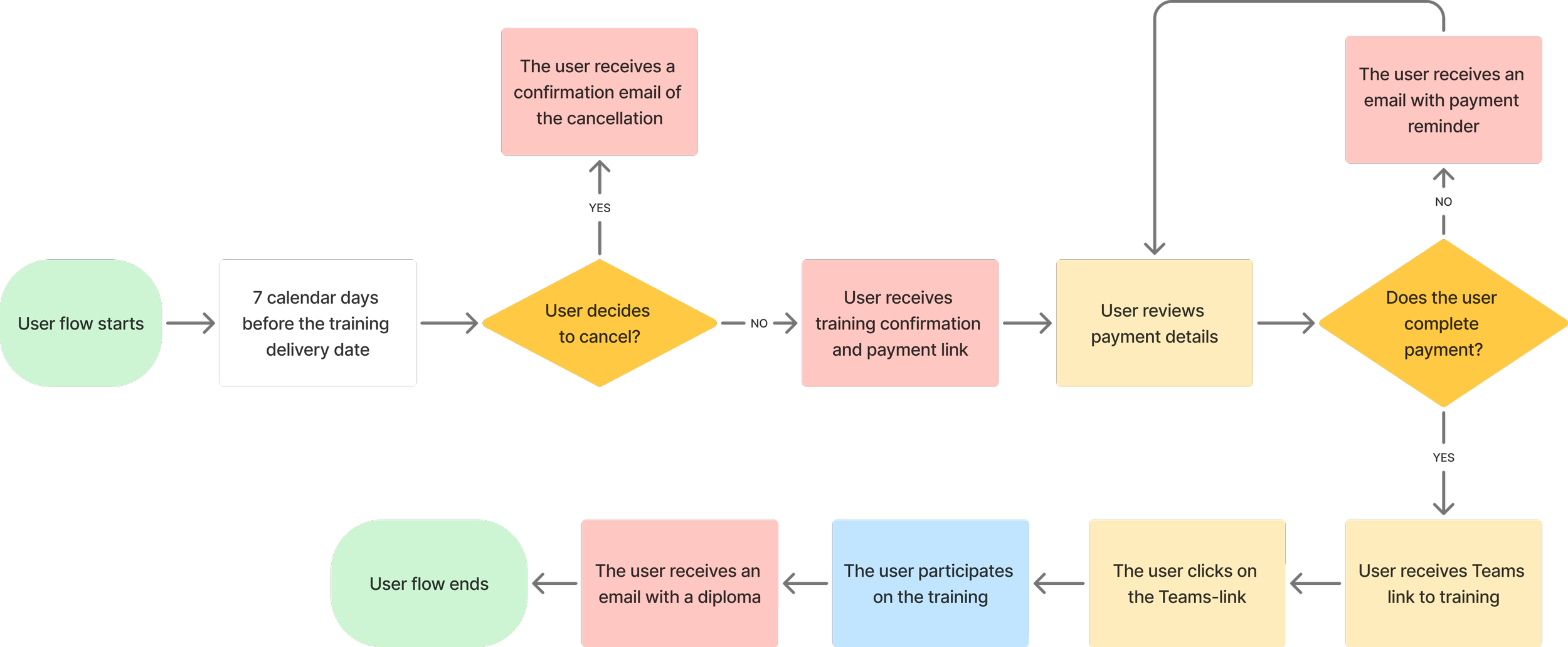
I mapped three core user flows which translated research into key decision checkpoints:
“Is this course right for me?”
“Can I get approval?”
“When do I commit financially?”
The flows allow users to pause, gather information, and return without friction.
User Flow 1: Course Discovery
User Flow 2: Course Registration
User Flow 3: Course Payment
Designing for Trust
I separated registration from payment to reduce commitment friction. Instead of requiring immediate payment, financial commitment occurs after the cancellation window.
In enterprise contexts, upfront payment increases hesitation due to shared approval processes. This sequencing reduced perceived risk and strengthened trust in the booking flow.
The Design Process
Wireframes
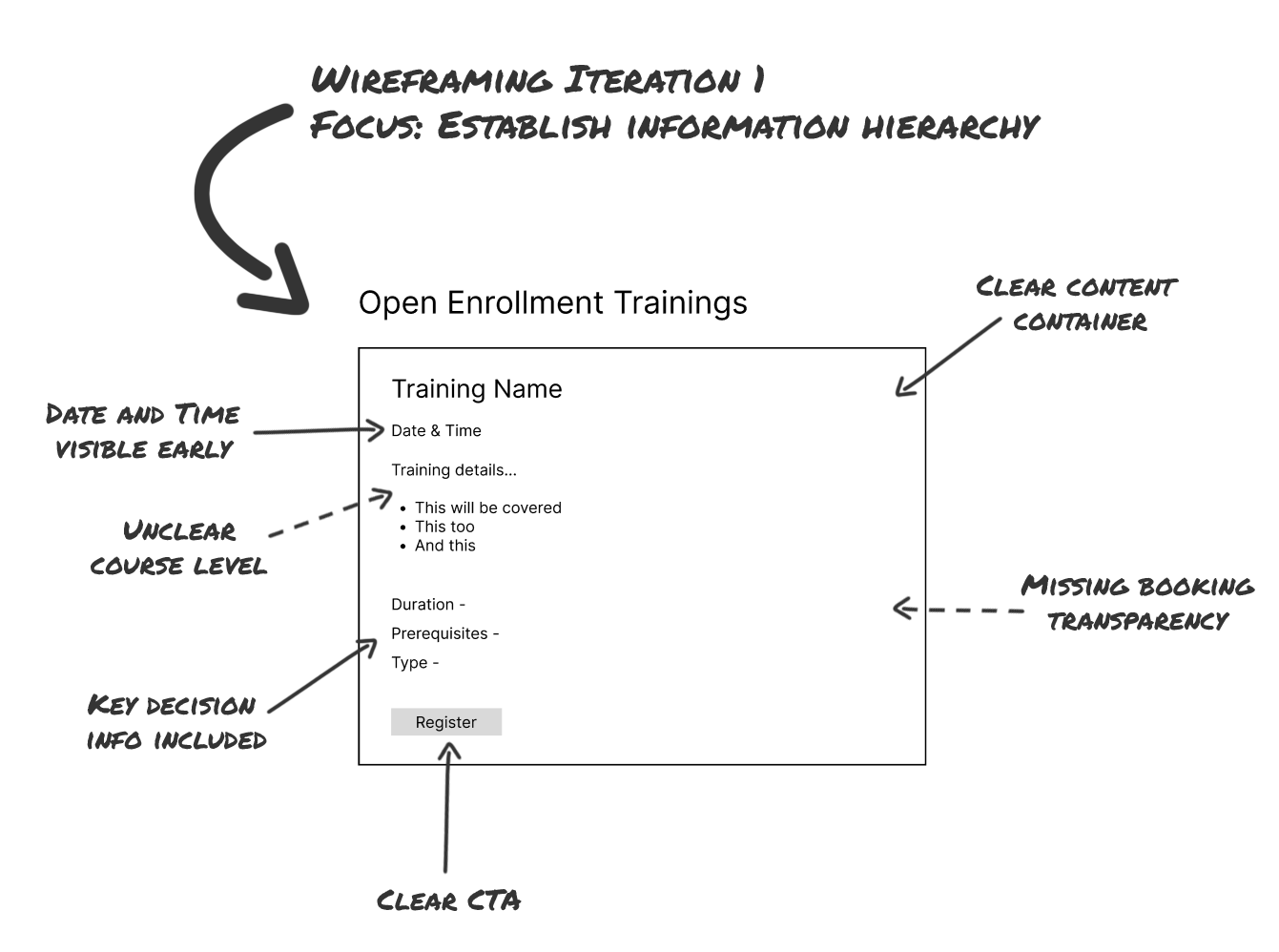
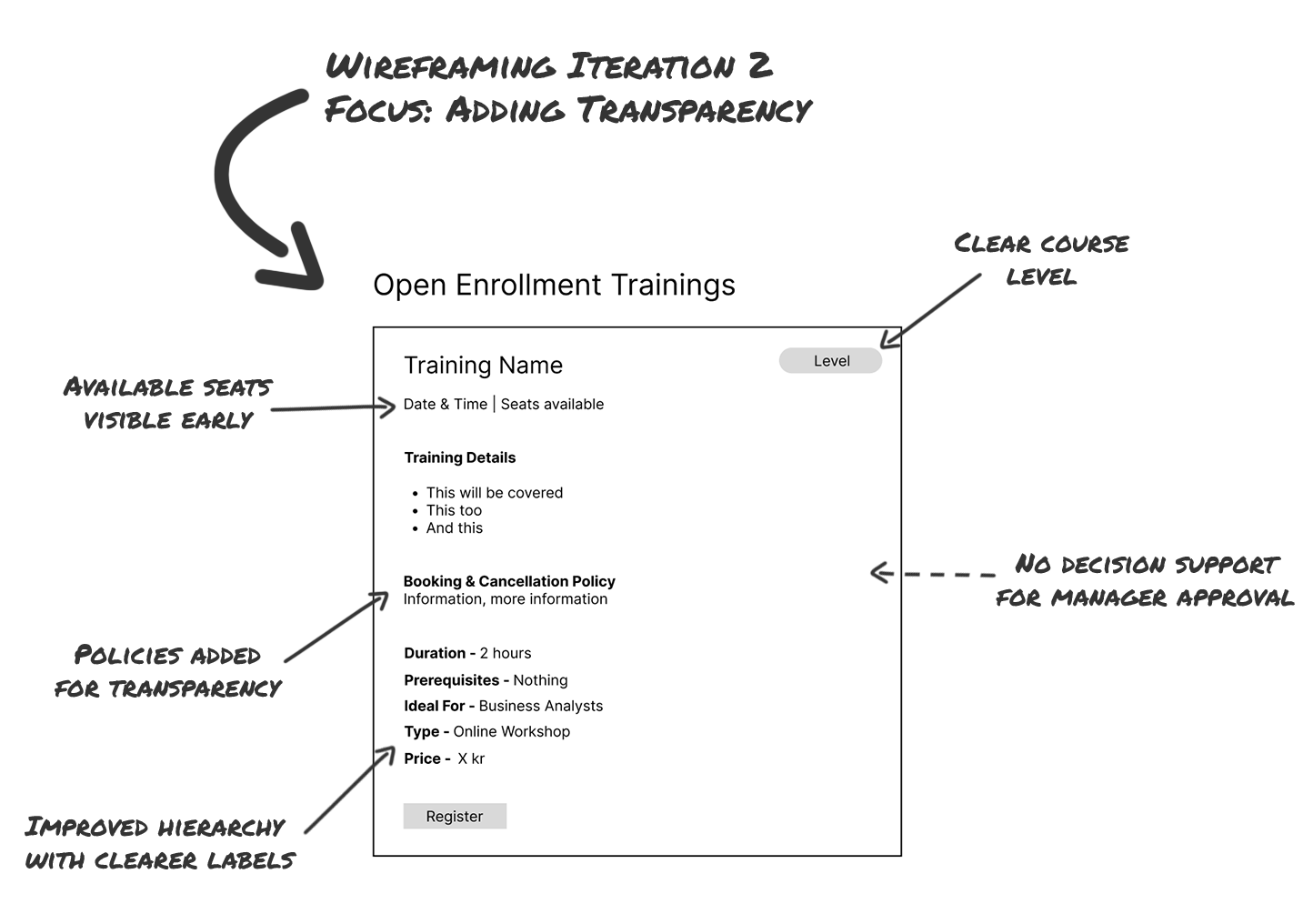
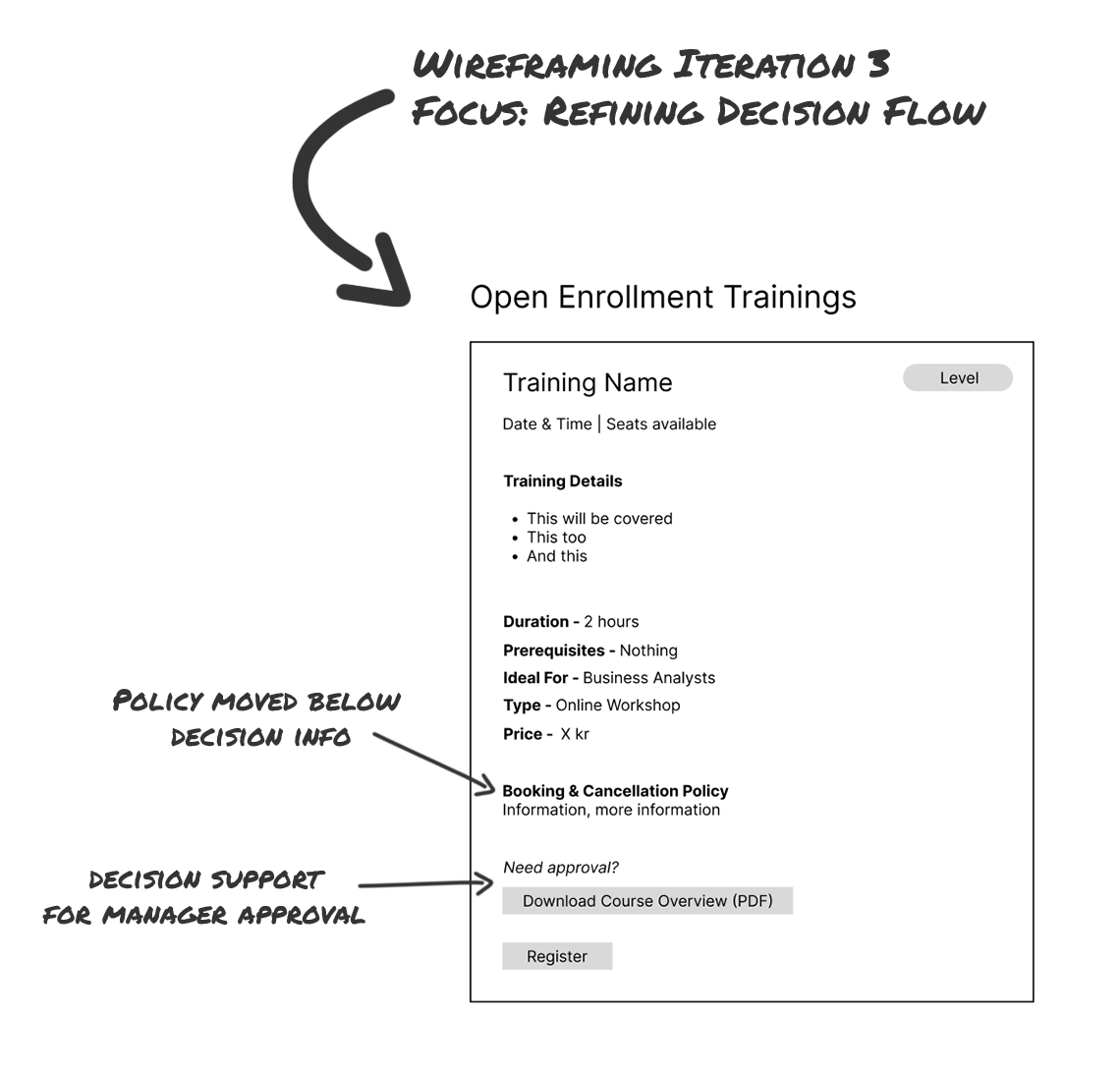
In wireframes, I structured the page around the core decision: “Is this session right for me?”
Priorities included clear level differentiation, visible session details (date, format, seats), separation of value and logistics, and support for internal approval (downloadable overview).
The hierarchy emphasized evaluation before commitment.
The Prototype
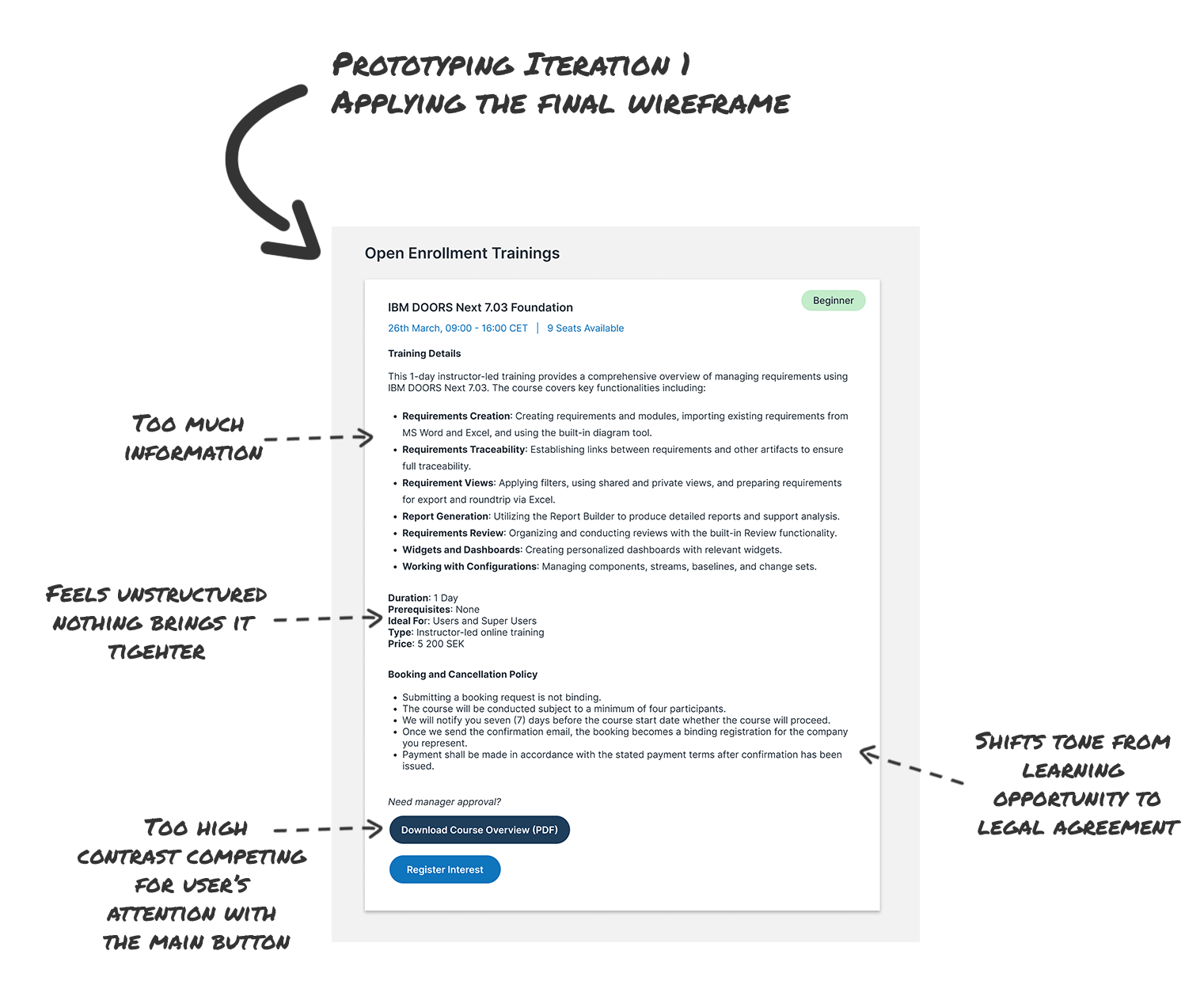
I translated the final wireframe into a high-fidelity prototype and conducted structured walkthroughs with colleagues. They were asked to locate key information (price, level, booking terms) and assess clarity around commitment.
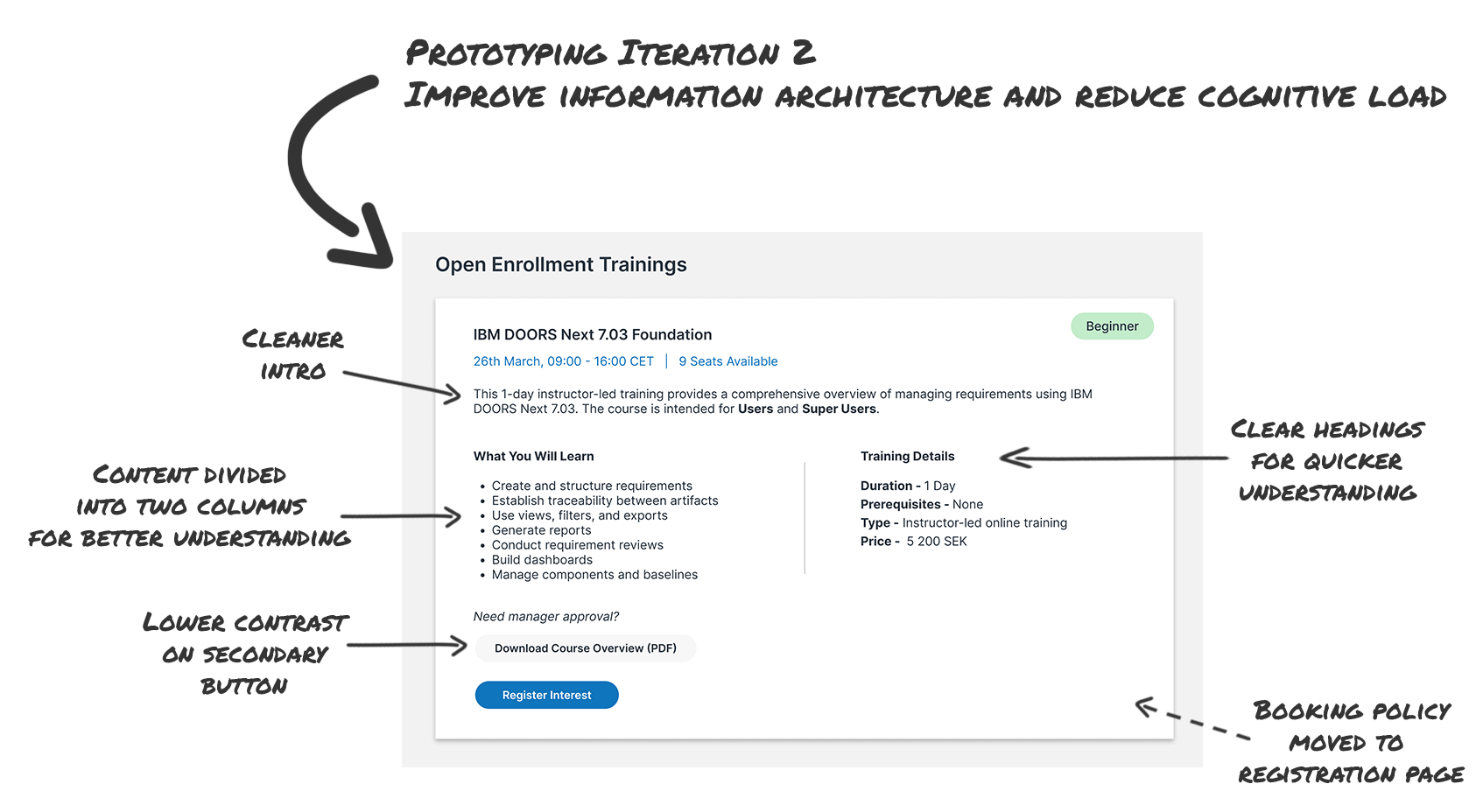
The feedback revealed friction in hierarchy, content density, and CTA emphasis, which informed the final refinements.
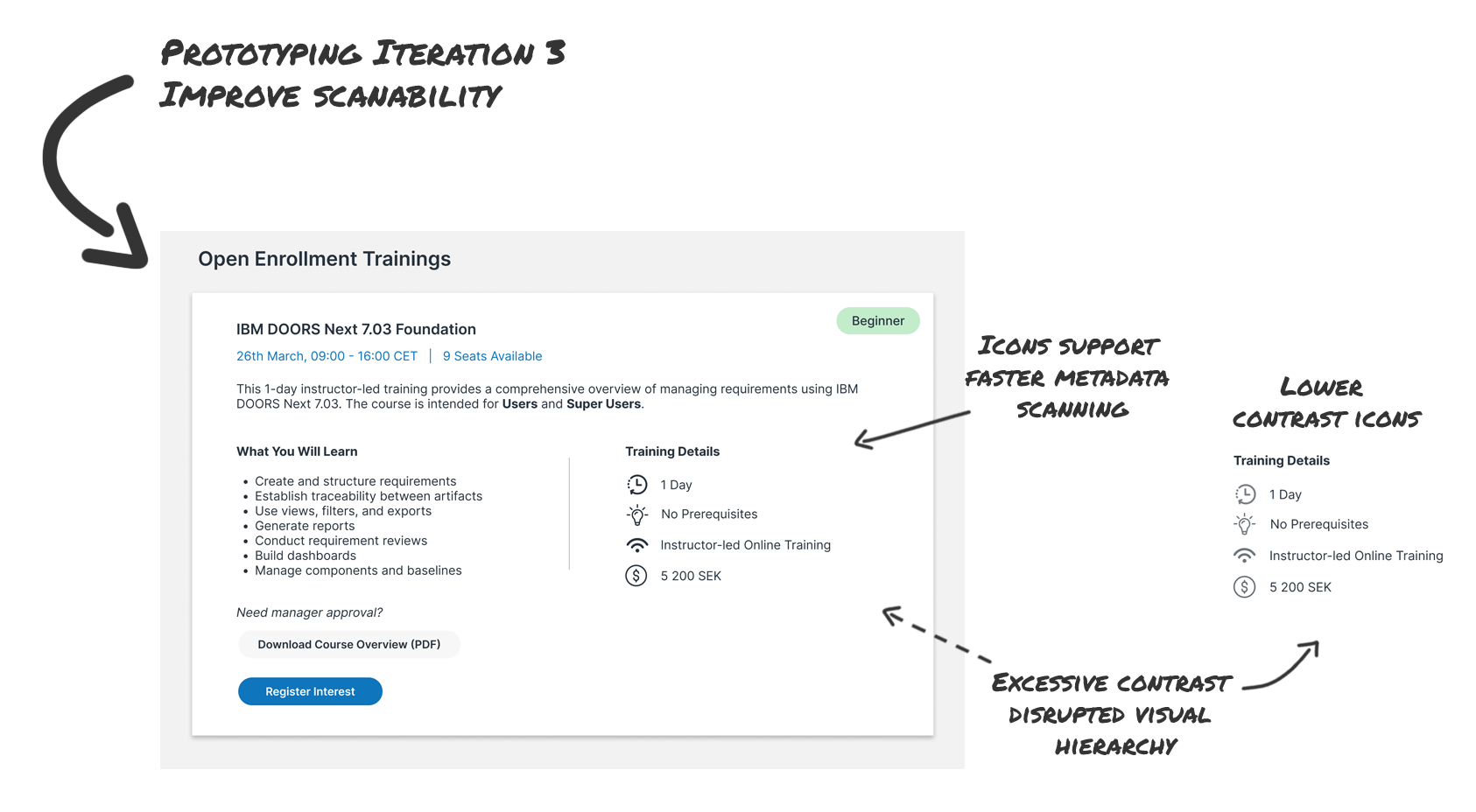
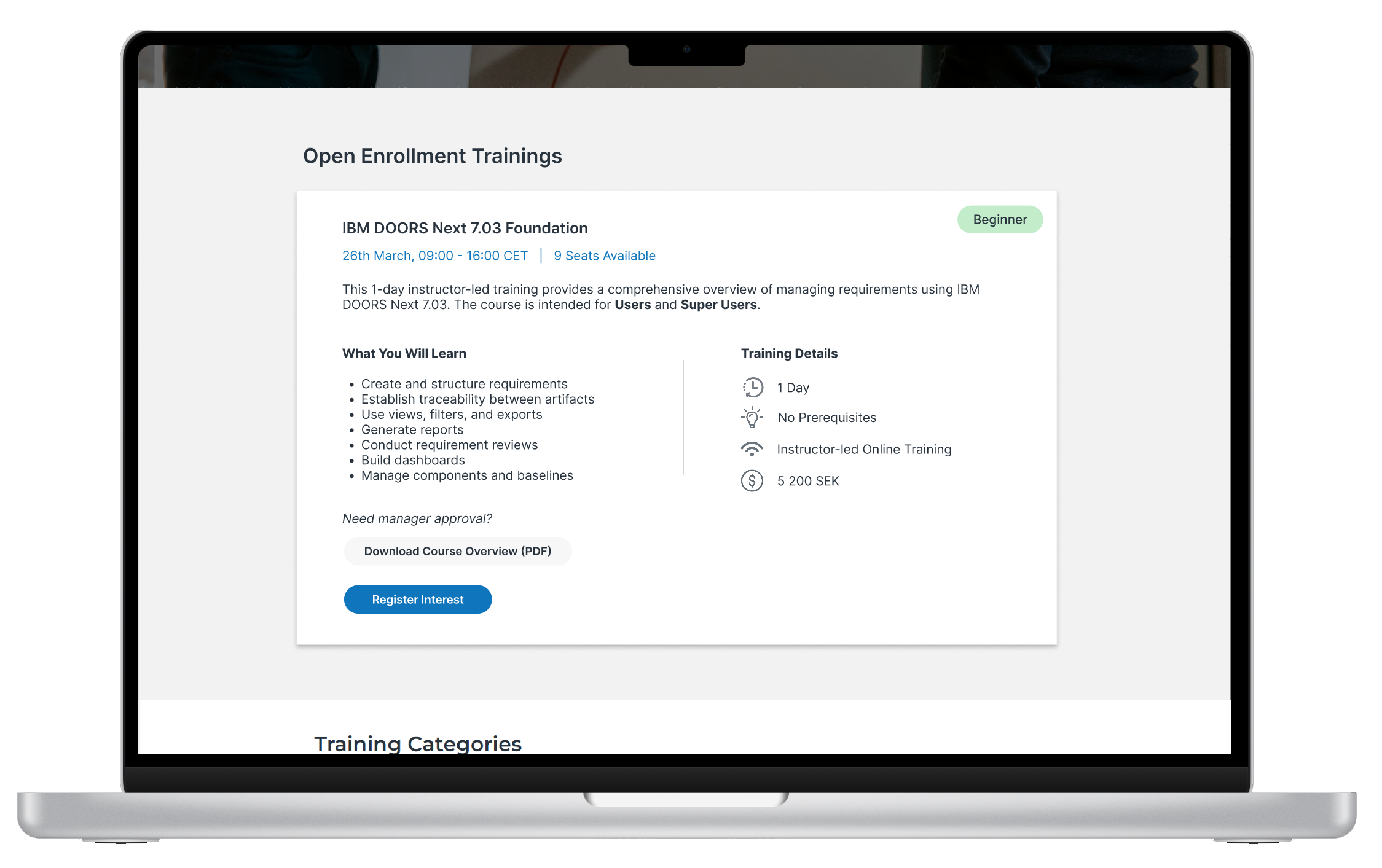
Final prototype
The final prototype prioritizes structured evaluation before commitment. Clear level differentiation, visible session metadata, and separation of value from logistics support fast, confident assessment. Hierarchy refinements reduced cognitive load and improved scannability, while delayed financial commitment lowered perceived risk in shared B2B approval contexts.
The solution enabled a shift from manual coordination to scalable self-service booking.
What Did I Learn?
Structure shapes perception
Clear interaction phases reduce cognitive load and make complex B2B decisions feel manageable.
Commitment timing influences trust
Delaying financial commitment lowered perceived risk and increased user confidence.
B2B flows must support shared decisions
Enterprise experiences need to accommodate approval dynamics beyond the primary user.
Hierarchy drives conversion
Small adjustments in metadata visibility and CTA emphasis significantly improved decision clarity.